This is going to be more about a funny experience I had today in Japanese class. As you know, I often use music to learn new words and phrases, as well as expose myself to different ways to form sentences. So far, it hasn’t failed me, but for the first time, I encountered the situation where my teacher straight up told me: “Lol, that doesn’t make sense”.
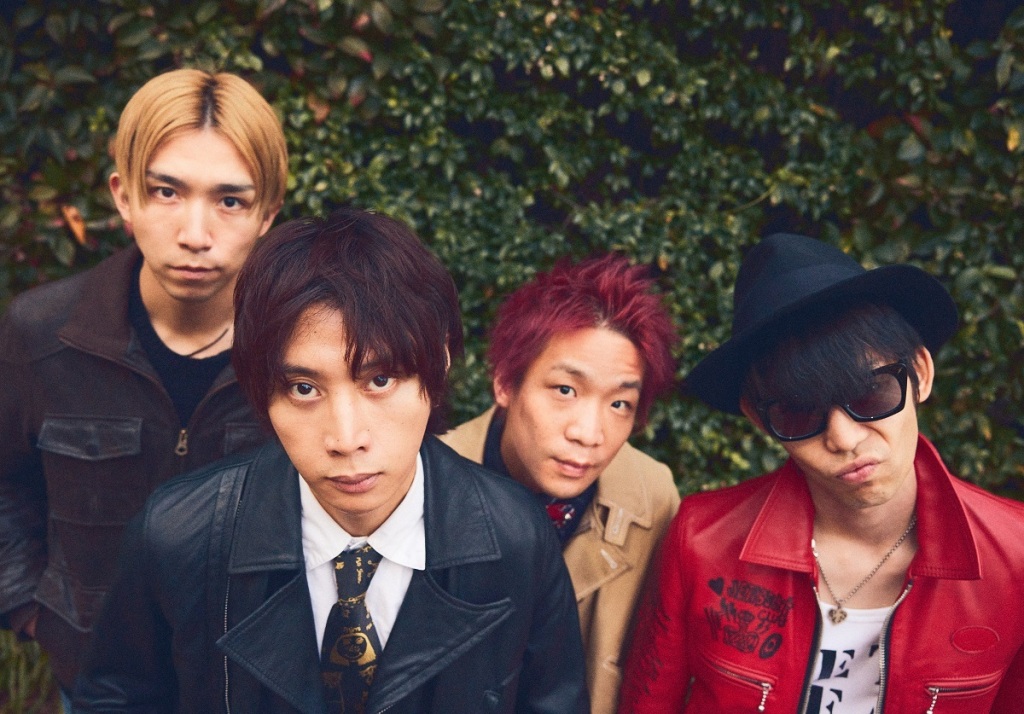
At the time, I was joking about work and said that every week, I die and come back to life. Remembering this song by Maximum the Hormone “ぶっ生き返す” ,(boo-ee-kee-ka-eh-soo) I was able to sort of piece together the meaning. 生きる(いきる/ee-kee-roo) means “to live” (like breathing, not living in a house) and 返す(かえす/ ka-eh-soo) means “to return”, so I thought the title of the song was “Come back to Life”, especially when the video involves digging up a grave. Using this knowledge, I said: “毎週死んで生き返す(いきかえす/ee-kee- ka-eh-soo) ” and my teacher corrected me with “生き返る”(いきかえる/ee-kee-ka-eh-roo)
The latter directly translates to “revive”, and I was so intrigued by this small change in kanji that I texted my teacher in the evening with the title of the song. My teacher replied that there is no such phrase as 生き返す, and that instead, the title “ぶっ生き返す” might be playing on the phrase “ぶっ殺す” (ぶっころす/boo-kko-ro-soo), which means–according to Google “beat to death”. However, she, herself, isn’t positive on this.
In regards to the title, I never really thought of it as one word; rather, I thought that the “ぶっ” in the title was like “Boo”, which in the context of coming to life, completely makes sense. Not only that but even though it’s written in hiragana, as you expose yourself more and more to how Japanese people USE Japanese, you’ll see the general disregard for when to use katakana and hiragana. For instance, to make something trendy or cool, regardless of whether or not it’s a borrowed word, katakana may be used, or vice versa.
While most people say that the band uses nonsensical lyrics, I still don’t really….think that’s case. The lyrics are probably extremely convoluted, which may be why none of my Japanese friends seem to understand what’s going on. Unfortunately, I’m not at a level to where I can translate the song, myself, but I was so shocked by what happened in class today that I felt it was worth sharing in a post. In any case, I’m glad it happened. As an English major, I really enjoy wordplay, so to encounter a really strange example like that was fascinating!
I think that’s something we language learners often forget: people don’t always speak grammatically, and sometimes they don’t even try to. So when we hear a native speaking strangely, for instance, we’re doubtful or confused. Of course, the point of language is to be understood, but I think we overemphasize the importance of being correct when language is so much more than just a string of words.
Being someone who occasionally delves into poetry, my interest in bending the rules is likely due to that. For instance, these days I’m trying to keep up a running gag between a friend and me; in English, we sometimes express a crescent moon as a ‘Cheshire Smile’ and I texted my friend “笑い月”, which is translated to “Smiling Moon” and means absolutely nothing in Japanese. My friend corrected me and, while I understand it’s wrong, I still text that to him when there’s a crescent moon because it’s something we share.
To end, I’m not saying that we should be stubborn and completely disregard corrections when learning a language, but as we learn the rules of a language, we shouldn’t think of them as restrictions. Instead, we should learn those rules so we can play an interesting game.


 that foreign music blog🌎
Leave a comment