
pic credit to: sbs.com
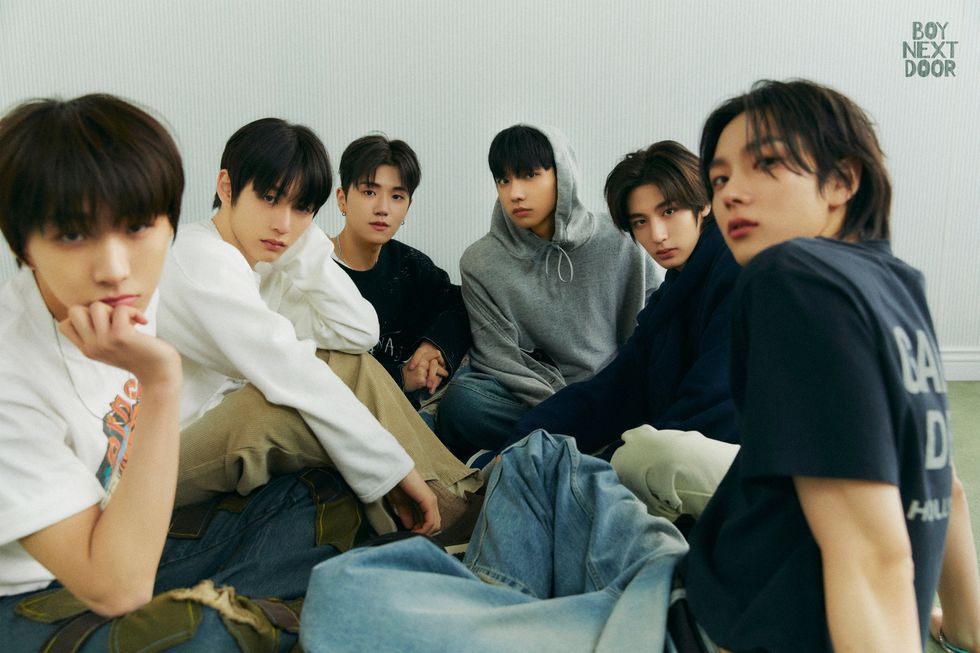
I definitely listen to K-pop more than I write about it, but seeing more of my American friends share my fascination with the genre sparked curiosity as to exactly how that happened. Of course, BTS’ Billboard wins have drawn more attention to Korean music, but there have always been international K-pop fans—long before BTS. It may be the simple fact that it’s pop music, but comparing J-pop or other non-English pop, I started to wonder why it was KOREAN pop that ended up being mainstream.
Well, aside from the handpicked talents trained vocally and physically for success, I believe that language has a lot to do with why K-pop grew as big as it did. To start, Korean is an extremely accessible language. I’m nowhere near fluent—or even at a conversational level–but with an easy alphabet and reasonable grammar system, it’s no surprise that there are so many translations of Korean songs available. A recent example is MONSTA X’s “Jealousy“, which was translated into 54 languages by FANS.
Although Asian languages are particularly hard for English-speakers, given that they’re in two completely different language families, I think the reason that English-speakers are a bit more open to K-pop is that the sound of Korean is somewhat familiar. I never noticed this until I went to Korea and met someone who could speak all but a few English phrases. However, because he had no accent at all, I kept getting the impression he was fluent. If you listen to Korean natives speaking English, you may notice this same thing. Even if they have an accent, it’s never as strong as, for example, a Japanese accent.
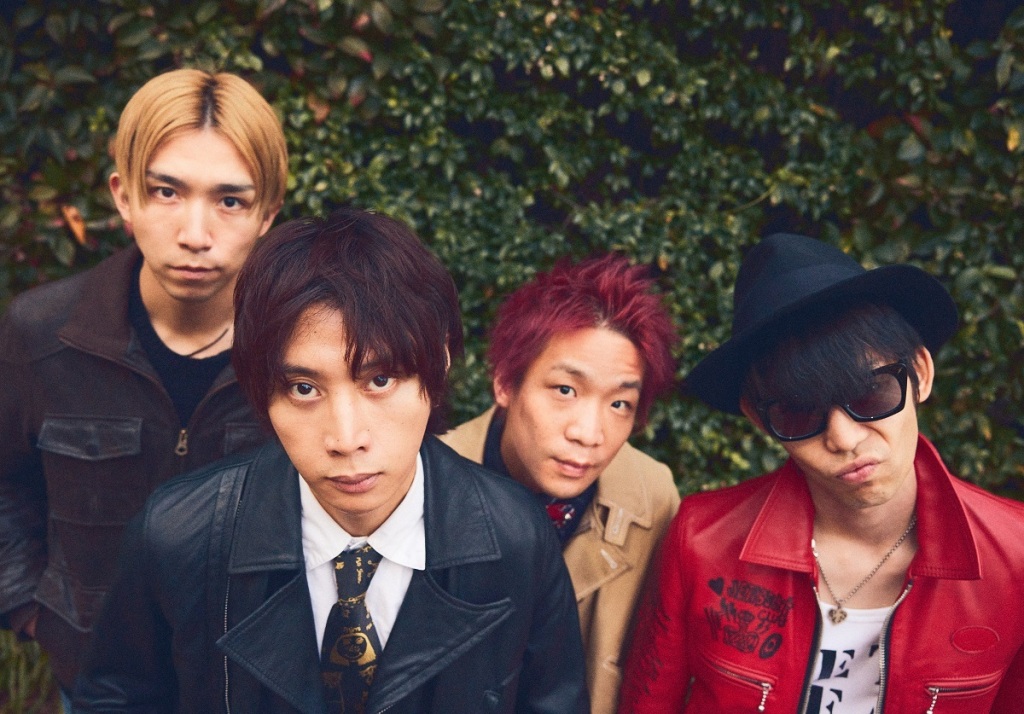
I also think that the Korean alphabet, rather than a phonetic system, allows Korean to complement English. Because of how Japanese, for instance, is divided into pairs of sounds, you’d have to fit the rhythm between words, syllables, or stretch the sound between LETTERS. One example of this is in Utada Hikaru’s “First Love“. She does a superb job of using English in the song, but you can hear that in some parts, she has to split some English sounds in awkward places to compensate for the Japanese. While the English parts were written IN ENGLISH, the song was arranged for Japanese, which may be why there are some parts where the words don’t naturally fit the flow.
Consequently, what I notice about Japanese artists is that IF they choose to sing in English, they’ll sing the entire song in English. Again, Utada Hikaru is a great example of this because of her native-English abilities. Many of her songs have two versions: English and Japanese.
However, with the Korean alphabet system, you can’t split words; rather, you can split SYLLABLES, like in English, making the ability to throw in an English phrase with ease. Let’s take BTS’ Born Singer. Can you pick out the English from the Korean? The transition between languages is almost seamless, and while this also comes down to good writing and arranging, you can find this trend in almost any K-pop song. Another song that uses even MORE English is Big Bang’s “LIE“.
The importance of this ability to blend languages is that the Korean-ness of the music is maintained. Sometimes what happens when songs are translated is that something from the original is lost. I don’t think that when foreign artists debut in the West, audiences necessarily expect or WANT them to “sound Western”. I think the importance is that whatever culture or language, there’s something relatable. In the case of Korean, the long vowels and deep tone of the language, I feel, is something English-speakers can appreciate.
To end, due to the flexibility of Korean, I think K-pop will act as the gateway to other Asian pop in the West. The music industry as a whole will probably start sounding a lot different. I don’t think language is the only reason K-pop reigns over the Asian pop world, but K-pop is the first to make a noticeable impact in the West, which is deserving of recognition.
I’m not a linguist nor am I a musician, but this is something I’ve been thinking a lot about; why K-pop became such a sensation while the popularity of other Asian music has been limited to the artists themselves. We know Utada Hikaru and One Ok Rock, but everyone knows KPOP as an INDUSTRY. There has to be more behind it than just good music and good looks.


 that foreign music blog🌎
Leave a comment