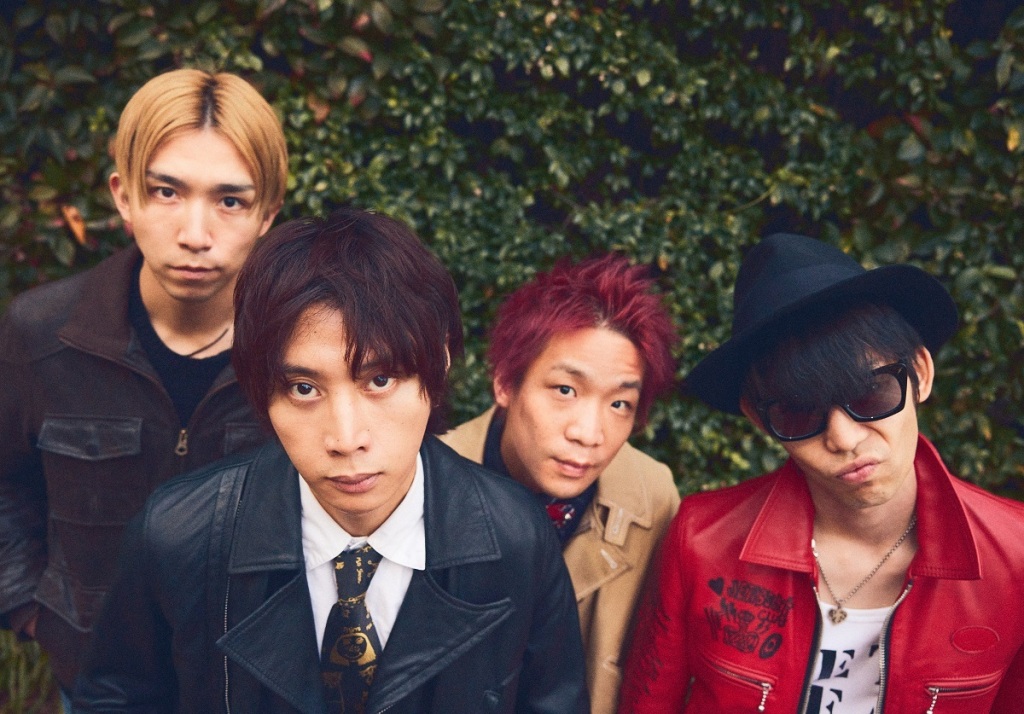
SO AS YOU GUYS KNOW, I’m pretty obsessed with Six Lounge these days. Aside from their hard-hitting vocals, one of the things I’ve come to really love about them is their lyrics. I’m not sure if it’s my Japanese improving or if they just happen to use a lot of the Japanese I’ve learned, but I love their songs more and more as the meanings take on a clearer shape. Today we’re going to delve into their song “くだらない“, or “Koo-dah-rah-nah-i”.
This song is about two years old and features contrasting images of the band in gray-scale and a woman in pale blue. From the tone alone, it’s easy to guess that this is some dreary lost-love song, but I’d been singing along to it for the longest time without really even knowing what the title meant. I suppose we all experience it–whether it be in our native tongue or a second language: we can’t always be bothered to research everything. Then, walking home a few days ago, somehow I had an ‘a-ha’ moment.
“Wait…is くだらない like the…’go down’ くだる?….So like…wait. WAAIT.”
I hurried home and began to look a bit more closely at the lyrics, Google translate at my side. The results for くだらない, however, came up to be something completely different. It read “stupid”. Now, based on the song alone, this makes COMPLETE sense, but then I wondered how it was different to the more commonly used ばか (bah-kah). In fact, there isn’t a big difference, but it all depends on how you say it.
For English speakers, I think it’ll be easy to conceptualize くだらない. It’s closest to the word ‘pointless’, which can be used in both good and bad situations. For example, you have pointless conversations with friends, but get scolded for saying pointless things at work. くだらない is used the same way and, luckily, it’s quite easy to use.
くだらない is a verb in the negative form, and such verbs can easily be placed before a noun to describe something. If you know the basic Japanese structure of subject-object-verb, this should be pretty straightforward.
For example: 「たろがいつもくだらない話を*言ってるんだ。。。」
「たろがいつもくだらないはなしを*いってるんだ」
(ta-roh gah i-tsu-mo ku-dah-rah-na-i ha-na-shi o *yu/ee-tte-roon-da)
(Taro is always telling silly stories)
「*the word 言う/いう (ee-u) is often, but incorrectly, pronounced as “yu”–with a slight ‘ee’ sound at the beginning. I personally use “yu” a lot, and…honestly I’ve never been corrected on it. I did hear from a friend that everyone says that word wrong, but I think it’s because it links a lot better and is thus widely accepted. However, as a Japanese-learner, this may be confusing, so I thought I should clear up why there are two pronunciations noted.」
There’s actually a similar phrase which can be structured the same way. 「いみがない」, or “ee-mee gah nah-i”, which means “meaningless”. Just like withくだらない, we can put いみがない in front of a noun or noun phrase to modify it.
For example: 「意味がないものはいらないね」
「いみがないものはいらないね」
(ee-me gah nah-i moh-noh wah ee-rah-nah-i)
I don’t need meaningless things.
If you’re not a native English speaker and find these differences a bit ambiguous, くだらない and いみがない can be used in both positive and negative situations—well…”positive” like the situation has no real consequence. It’s being taken lightly. ばか, on the other hand is usually used negatively. ‘ばか’ can also be used to describe people, whereas くだらない and いみがない seem to be mostly used when talking about situations or items.
Now, as for the song, the word くだらない is actually used only a single time, so this wouldn’t make for good repetition practice, but I’ll translate the verse the word appears in, as well as the chorus because the song is SO DANG GORGEOUS.
「愛に飢えたら
ふたりきりになろう
革命は今どこでおこっているか
俺たちにはわからない
バカバカしくて
おかしくなるよ
悲しいからそばにいて
夕陽を見上げて
どうしよもなくなっていた
くだらないだろう」
「あいにうえたら
ふたりきりになろう
かくめいはいまどこでおこっているか
おれたちにはわからない
ばかばかしくて
おかしくなるよ
かなしいからぞばにいて
ゆうひをみあげて
どうしようもなくなっていた
くだらないだろう」
「ah-ee nee u-eh-tah-rah
hoo-tah-ree kee-ree nee nah-row
kah-koo-meh wah ee-ma doh-koh-deh o-ko-tte-ee-roo-ka
o-reh-tah-chee nee wah wah-kah-rah-nah-ee
bah-kah-bah-kah shee-koo-te
o-kah-shee-koo nah-roo yo
kah-nah-shee kah-rah so-bah nee ee-te
yoo-hee o mee-ah-geh-te
doh-oh-shee-yo-moh-nah-koo-nah-tte-ee-tah
koo-dah-rah-na-i dah-roh
If you starve for love
Let’s be alone
Whether there’s a revolution happening somewhere
We don’t know
Turning stupid and strange
I’m sad so stand by my side
I look up at the setting sun
There was nothing I could do
There’s no point
I’m not a certified translator or anything, so there’s a good chance a few of these phrases are a little off, but hopefully you can get a better idea of how poetic this song is. A lot of their songs flow the same way, so if your Japanese is up to par, take some time to appreciate more of their music. And even if it isn’t, you can still enjoy their sound.
Well, that’s it on くだらない. I hope it wasn’t pointless to you, because I will FOR SURE being using the crap out of this word. That is, when the occasion arises. I’m not one for light conversation, anyway.



 that foreign music blog🌎
Leave a comment