Intro
We’re gonna take a look at Osaka-based three-piece rock band: kaneyorimasaru (often written in katakana as カネヨリマサル) and one of their most popular songs: 関係のない人 or “Irrelevant Person”. We’ll also learn about their unique name, their influences, and even touch on their Osaka dialect. In addition, I’ll introduce some Japanese grammar inspired by the band’s name: ~にまさるものはない, or ‘nothing is better than..’.
Click through the table of contents to jump to your favorite part, or keep reading to get a full picture of the band and what they’re about. ♫
Table of Contents
- Who is カネヨリマサル?(Kah-neh-yoh-ree mah-sah-roo)
- ~にまさるものはない grammar structure
- 関係のない人(kahn-kei noh nah-ee hee-toh) /Irrelevant Person
- Follow for more カネヨリマサル ♫
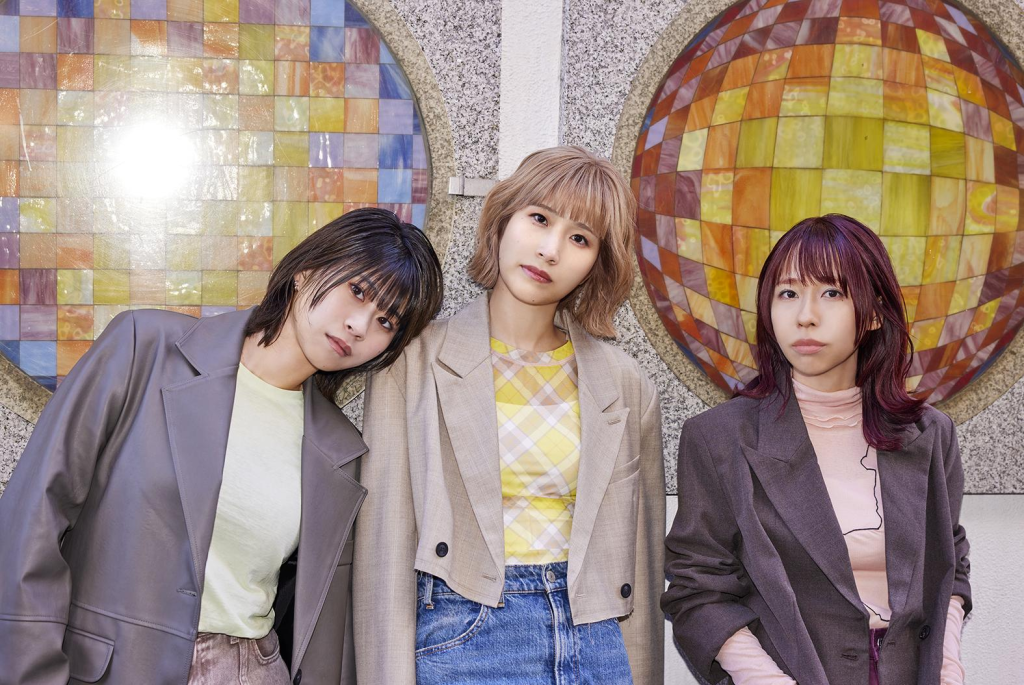
From left to right: Sana Morimoto (drums, chorus), Mina Chitose (vox, guitar), Mei Ishihara (guitar, chorus)
Who is カネヨリマサル?(Kah-neh-yoh-ree mah-sah-roo)
Kaneyorimasaru is a three-piece rock band from Osaka made up of vocalist/guitarist Mina Chitose, bassist Mei Ishihara, and drummer Sana Morimoto. They’re distinguishable by Chitose’s unique high-pitched voice, creating a palatable mix of sweet and sour with their emotional lyrics and powerful riffs. In an interview with SONAR MUSIC, Chitose stated that some influential bands are BUMP OF CHICKEN, チャットモンチー(chatmonchy), and THE SALOVERS. Similar sounding bands also include TETORA, Yonige, Regal Lily (リーガルリリー), and HUMPBACK.
The name ‘Kaneyorimasaru’ is often misunderstood as referencing a Japanese phrase ’お金に勝るものはない’ (Oh-kah-neh nee mah-sah-ru moh-no-wah-nah-ee), which means “nothing is better than money’. However, Chitose explained on SONAR MUSIC that the name had mostly been inspired by the fact that there are a lot of bands with names that sound like they’d belong to a solo artist. Therefore, ‘kaneyorimasaru’ could be thought of as ‘Kaneyori Masaru’, but isn’t stylized that way.
The band formed in 2014, but made their major debut in 2023 with their first full album “わたしのノクターン”(wah-tah-she noh noh-ku-tah-n), meaning “My Nocturne”. However, many of their popular songs are from the 2019 mini album: “かけがえなくなりたい” (kah-keh gah eh-nah-koo nah-ree-tah-ee) which means “I want to become irreplaceable”. It features “恋人(Lover)”, “もしも (What if)”, “はじる、夜” (Run, Night) and “ひらりとパーキー” (Fluttering and Perky).
~にまさるものはない grammar structure
The kanji for まさる (mah-sah-ru) can also be read as ‘win’, or 勝, which can already give you idea that this structure refers to something WINNING over something else. A similar phrase is~に負けない (nee mah-keh-nah-ee), which means ‘~can’t beat’. For example ’バスケットボールには弟に負けない’ or ‘I can’t beat my brother at basketball’.
In the same way, we can use ‘~まさるものはない’ to express when we feel that ‘nothing beats~’ or ‘nothing is better than~’. To make a sentence, you simply attach a noun or noun phrase before “にまさるものはない”. For example, “お風呂で酒を飲むこと にまさるものはない“, which means “There’s nothing better than having a drink in the bath”, with ‘having a drink in the bath’ as the noun phrase.
関係のない人(kahn-kei noh nah-ee hee-toh) /Irrelevant Person
The many ways to use ~な (nah)
The lyrics often end with the syllable ‘な’ (nah), and display the different nuances it can hold depending on the context.
One way it’s used is to express desire. For example, when we see someone eating ice cream on a hot summer day, we can say いいな…(ee nah…) to express, “that looks good…”(I wish I had ice cream , too).
Remembering that this band is from Osaka, I did some light research and learned that ending with ‘な’ is also part of the Kansai dialect (Osaka is in the Kansai region). It’s interchangeable with “ね” and is used to express agreement or requests. When the sound is elongated, it’s emphasized or sounds more desperate. Going back to the ice cream example, the “いいな” would become “いいなぁ”.
If you want to learn more about the Kansai accent, I watched this video by 関西講座 (Kansai Kouza).
Throughout the song, I’ll highlight all the ‘な’s so you can clearly see how the nuance changes.
Lyrics/ Translation
ねえ, 食欲もないんです
(ねえ、しょくよくもないんです)
Hey, I have no appetite
何も考えずにいたい
(なにもかんがえずにいたい)
I don’t want to think about anything
計算するのもやめて
(けいさんするもやめて)
Stop your calculating
ずるい人になってみようかな
Shall I try becoming someone unfair?
言葉が足りていない人
(ことばがたりていないひと)
The person who doesn’t have enough words
目を合わせたら照れる人
(めをあわせたらてれるひと)
The person who blushes when we meet eyes
だったなって考えたり
(だったなってかんがえたり)
Is what I’ve been thinking about
もう関係ない人なのになぁ
(もうかんけいないひとのになぁ)
Even though you’re already irrelevant
やめてしまいいたいな
君の顔忘れたりしたいのに
(きみのかおわすれたりしたいのに)
I wish I could just stop
こころは錆びていないのに
(こころはさびていないのに)
Even though my heart hasn’t rusted
くすんだふりのあなたとか
Even though you and everyone else have gone dull
毎日楽しそうに笑ったりしている
(まいにちたのしそうにわらったりしている)
Everyday you’re smiling and having a good time
あなたのこと羨ましく思う
(あなたのことうらやましくおもう)
I think I’m jealous of you
思う
(おもう)
I think so
迷路に迷うフリをして
(めいろうにまようふりをして)
Pretending to be lost in a maze
答えを知っているわたし
(こたえをしっているわたし)
Me, who has the answer
なりたいのは偉い人じゃない
(なりたいのはえらいひとじゃない)
I don’t want to become a noble person
君に一番に
(きみにいちばんに)
Even though I was the one
好かれたかったのになぁ
(すかれたかったのになぁ)
who you loved the most
恋に破れて大人になるんだね
(こいにやぶれておとなになるんだね)
I’ll grow up to be broken by love, huh?
誰にも渡せない愛を知って
(だれにもわたせないあいをしって)
Knowing the love that I can’t give away
優しくなるんだよね?
(やさしくなるんだよね?)
I’ll become kind, right?
やめてしまいたいな
I wish I could just stop
君で笑ったり泣きたくないのに
(きみでわらったりなきたくないのに)
I don’t want to keep laughing or crying over you
やめてしまいたいな
I wish I could just stop
好きも嫌いになりたくないのに
(すきもきらいになりたくないのに)
I don’t want to love or hate you
君は関係ないのに
(きみはかんけいないのに)
Even though you’re irrelevant
Interpretation
While this is a straightforward breakup/heartbreak song, some parts that stuck out to me were the usage of “のに” and the “aah” between the verses.
“のに” can be translated as ‘even though’, so to end a sentence with it suggests an underlying meaning, which might be “Even though…I still love you”. The usage also makes me wonder if there’s an implication of the opposite meaning, especially when looking at the part about “even though my heart hasn’t rusted”. Or perhaps, the it’s suggesting “even though my heart hasn’t rusted…it will be soon”. I could also be translating it wrong, but the “のに” creates an interesting effect, anyway.
I also appreciate the inner dialogue, mirroring how we often criticize ourselves when we’re not over someone we know we should be.
The pain the speaker feels is also well-expressed in the “aah” parts, which is reminiscent of exasperation towards oneself and the desire not to want what you can’t have.
Follow for more カネヨリマサル ♫
What did you think? Although ‘関係のない人’ is only one example of their great songs, it’s the one that made me a fan. I really love the juxtaposition between the hard guitar and Chitose’s cute voice, which I feel really emphasizes the brutal honesty of the lyrics. Is this your song your favorite now, too?
Follow their social media for updates on their music, live shows, and interviews!


 that foreign music blog🌎
Leave a comment